

We use cookies to ensure our website works properly and to personalise your experience. Cookies policy
Appasaheb Birnale collage of pharmacy sangli
The Six Sigma (SS) methodology is currently one of the most popular techniques in the field of quality management because it improves process output quality by locating and eliminating the root causes of errors and variability in both manufacturing and commercial processes. As a result, the body of literature on the subject of SS has grown exponentially over the past few decades; the large body of works in the field offers a good opportunity for a structured review of the articles to comprehend the development of the idea, the areas in which it is used, and potential future directions for research. The primary SS approaches created for both large and small businesses have been chronologically reviewed in the literature review to Highlight specific SS literature facets and a few SS methodology applications. A Strengths-Weaknesses criterion is used to evaluate the papers that can be found in the literature. Additionally, an evaluation based on compliance with some milestones identified as essential for every SS system has been carried out for those treating the application of the SS methodology into both large companies and Small & Medium Enterprises (SMEs). The paper concludes by discussing potential future developments in the research field.
Total Quality Management (TQM) is still widely used in modern industry as an all-encompassing quality programmed, but many businesses are expanding this kind of initiative to include strategic and financial considerations [1]. While there are some conceptual differences between TQM activities and Six Sigma systems, moving from the firsts to a Six Sigma programmed is essential to successfully implementing a quality management system [3]. Six Sigma is the current stage of evolution following the TQM hype of the early 1980s. A business strategy known as Six Sigma aims to find and eliminate the root causes of errors or defects, which are anything that could result in customer dissatisfaction [4]. It uses the normal distribution and a strong correlation between product Non-Conformities (NCs), or defects, and product yield, reliability, cycle time, inventory, schedule, etc. [6]; Six Sigma activities are not restricted to process or operation levels but extended to all levels of an enterprise to reduce costs and produce high-quality products. Six Sigma is a widely used management innovation methodology that has been shown to produce high-quality products and lower costs at all levels of an enterprise. It has been widely adopted in a variety of industries. The two most well-known success stories of Six Sigma implementation are General Electric and Motorola [7]. Along with reaping significant benefits in the manufacturing industry, the Six Sigma movement is also gaining traction in the fields of healthcare, marketing, engineering, finance, and law [8]. Numerous studies have been conducted on the application of the methodology in large corporations, but very few have been reported on the successful use of Six Sigma in Small and Medium Enterprises (SMEs), which are the backbone of the contemporary economy [9]. The goal of this article is to provide a concise overview of the SS topic as it is discussed in the literature. It also provides a preliminary classification of the works based on three different approaches: the application of the SS methodology in large and small- and medium-sized enterprises (SMEs); a strength-and-weakness analysis of the articles analyzed for the review; and an assessment of some key milestones that the authors have identified as the fundamental components that each SS approach should have.
RESEARCH METHODOLOGY-
The collection of articles about interest served as the starting point for the literature review analysis. The ISI Web Of Knowledge databases were used to set up the authors' methodology. The key words "Six Sigma" in the title, abstract, and key words were searched for by the authors. A total of 156.749 works has been cited from a total of 4.241 articles. For illuminating the SS topic, a citation and co-citation analysis was conducted, and the results indicate that Becke (131 citations), Sheldrick (116 citations), Reed (77 citations), and Harry (71 citations) are the most frequently cited authors. As would be expected, the chemical industry is the primary application area for the SS. methodology, though general physics applications also exist. The authors then limited their analysis to a smaller selection of articles based on how pertinent they were to their research. A total of 487 articles from the 1990s to the present have been carefully chosen and examined: 351 of them were eliminated after reading the abstract because the article's relevance to the topic wasn't fully established; another 93 were eliminated after reading the entire article because they didn't meet the criteria for inclusion (for instance, the majority of them were related to Six Sigma for specific types of businesses, specific industries, and specific sizes).The authors of the remaining 43 articles were chosen as being qualified for the study, and the articles were categorized into four 3 days activity.
First 3 days - deals with general Six Sigma methodology, covering DMAIC/DMADV models and belt systems;
Second 3 days - deals with general Six Sigma implementation, covering the "key factors" for a successful implementation of Six Sigma;
Third 3 days - discusses Six Sigma methodology in SMEs and explains the main guidelines to adapt the main Six Sigma features to a SME context.
Fourth 3 days - presents Six Sigma implementations in SMEs and discusses the main approaches to implementing Six Sigma in SMEs, including statistical tools and the significance of integration with other quality management techniques.
The 43 articles that were chosen as the study's foundation have undergone in-depth analysis and categorization by the authors based on the topics to which they are related. The two main categories are large corporations and small and medium-sized enterprises, and between theoretical models and actual application in case studies. The authors have then conducted a strength-weakness analysis. The main findings of this analysis are that while many works have been produced over the past few decades about Six Sigma in large enterprises, very few of them present a wellstructured approach with a discussion of the results achieved. Additionally, a portion of them demonstrate how the Six Sigma applied in actual case study. There is a lack of an effective theoretical framework or model for the articles about Six Sigma methodology and implementation in SMEs, despite the abundance of empirically developed data from surveys and interviews. This is one of the articles' biggest weaknesses. According to the next paragraph, the authors have determined four key benchmarks for a quality system based on the literature they have analyzed. Through this analysis, the authors have concluded that only a small number of contemporary methodologies found in literature adhere to all four milestones.
3.LITERATURE REVIEW ANALYSIS
3.1. Concepts, applications, and critical elements of Six Sigma for the first 3 days and second 3 days.
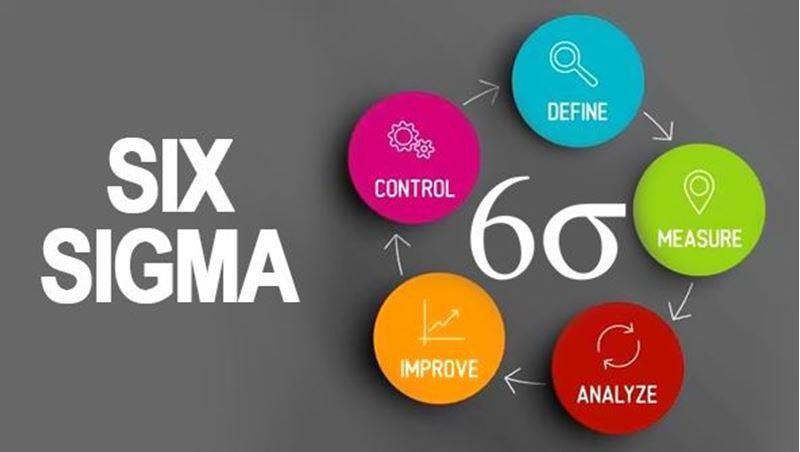
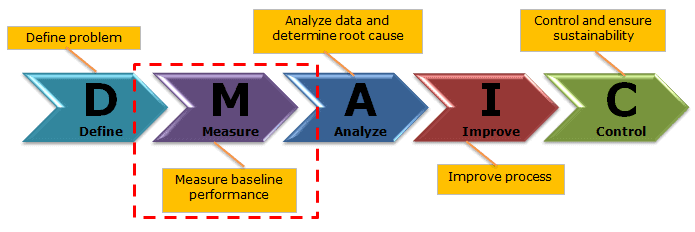
From a statistical perspective, "Six Sigma" is defined as having less than 3.4 defects per million opportunities or a success rate of 99.9997% (these calculations assume a 1.5 sigma shift in the process mean, 1.5 to account for long-term variation); similarly, in the business world, "Six Sigma" is defined as a business strategy used to increase business profitability [10]. At the operational level, Six Sigma builds on a variety of tried-and-true traditional methods and tools as well as brandnew methods for prioritizing improvements and calculating financial benefits. These brand-new methods must guarantee that the additional goal of profitability improvement can be accomplished [11]. Two straightforward models are used to implement Six Sigma's peculiar characteristics: DMAIC (Define-Measure-Analyze-Improve-Control), which is used when an objective can be achieved by developing products, processes, and services (PPSs) that the enterprise already owns, and DMADV (Define-Measure-Analyze-Design-Verify), which is used when PPSs need to be created and implemented. There are other phases alternations that have been developed in the literature (DMADOV, DMEDI, IDOV, DCOV, etc.), but there haven't been many studies to test them. The Six Sigma methodology identifies several key roles for its successful implementation because one of the methodology's main innovations is the professionalization of quality management functions. executive leadership (including the CEO and other top management figures); champions (who are in charge of the organization's Six Sigma development); Black Belts or BB (they apply Six Sigma methodology to specific projects); Green Belts or GB (as black belts, they have a good methodological preparation, although they work part-time to the project development due to other responsibilities within the organization); DMAIC, DMADV, and belt system represent the core elements of a Six Sigma organization [12]; Master Black Belts or MBB (Black Belts and Green Belts' guides with the projects development responsibility)
3.2. Six Sigma implementation in SMEs vs Big Companies (Third 3 days & fourth 3 days.)
Since SMEs are much more adaptable than large ones, changes can be made much more quickly. In addition, SMEs have highly visible top management and managers are more likely to interact directly with customers. Finally, SMEs have a better focus on the end user, which is one of the fundamental tenets of TQM. As [13] states, "it is generally easier to introduce radical change to smaller companies because there are fewer organizational barriers. In comparison to large corporations, SMEs appear to have a significant advantage thanks to their close ties and active communication with their most important clients. [2] However, SMEs also have unique requirements and constraints, particularly in terms of a lack of funding, which makes it impossible to implement cutting-edge quality management techniques. In fact, SMEs are frequently forced to use only basic statistical tools, such as process mapping, cause and effect analysis, histograms, and FMEA (Failure Modes and Effects Analysis), missing out on more complex techniques (run charts, non-parametric tests, etc.) that large companies use instead. As a result, the DMAIC procedure is still widely used, albeit with some differences. Additionally, because of limited funds and resources, decisions are frequently made for short-term profitability, for instance, the standard rule for having a full-time Master Black Belt is one per 1,000 employees; however, sparing personnel from becoming Black Belts is frequently unrealistic [14] due to the high cost of intensive training. Actually, based on the definition of SMEs provided by the EC, it would not make sense to maintain an MBB because a SME can only have 250 employees; for this reason, the attention for training programmed must be focused on BBs (one per 100 employees) and above all GBs because their costs are logically smaller and they are not working full-time on a single project as they have other regular jobs within the organization. Six Sigma can be combined with other models of quality management; improvement, are sufficient to meet their needs [15]. Thus, Six Sigma should not be replaced. the already existing quality management methods.
3.3. CLASSIFICATION AND EVALUATION OF THE ARTICLES
The 43 articles chosen for the research have been assessed using two additional criteria after the initial classification into SS for big companies and SS for SMEs: an evaluation of the articles' strengths and weaknesses and a matching milestone approach. The authors identified the milestones that every SS approach should adhere to for the second point, as stated in this paragraph.
The 43 articles for the first approach have highlighted the advantages and disadvantages from various angles. The review specifically highlights the extensive use of case studies (51% of the articles) for testing the theories formulated by the researchers as one of the most significant strengths. In order to highlight the most significant emerging successes or issues, real cases have been used, The detailed application and illustration of the SS methodology, particularly the implementation of the DMAIC and DMADV phases, as well as the detailed description of specific statistical and nonstatistical tools (23%) in support of the decision-making for each of the SS phases and the proposal of the Critical Success Factors (14%) for a successful SS implementation make up the second strength of the 21% of the total articles. The absence of case studies in the remaining articles (49%) and the lack of any application of the theories discovered during the research, on the other hand, could be summed up as the most significant weaknesses discovered during the review process. In order to successfully implement the SS methodology, the authors have determined the key milestones that address the needs and characteristics of the individual companies for the second evaluation criterion. The following four milestones have been determined. They make reference to the following 4 qualities that an SS system should have: Simple: The methodologies and tools used in SS projects need to be simple to understand and quick to use [2]; Universal: The SS approach needs to be applicable to every business that intends to implement it rather than being specific to any one type of enterprise; Holistic: If an organization already has a quality management system, the SS approach does not necessarily have to replace it; rather, it must gradually integrate each into the others. Developable: As a result of implementing the SS approach, additional tools and solutions should be created. Six Sigma is a continuously innovative technique, so it would be reductive to keep the methodology static. In particular, 56% of the 43 works have discussed a clear application of the first milestone, presenting straightforward, easy-to-understand, and quick-touse approaches and tools; only 7% have disputed the applicability of the discussed theories and practices generally; 56% have adopted a holistic approach to their studies; and 60% have spoken about their intention to keep up the SS philosophy as an iterative cycle of quality management activities.
4.DISCUSSION
here are a few key research gaps in literature, which this paper aims to address:
All of these issues need to be addressed in further research.
The following key exploratory research questions are derived from the research gaps and issues identified in the literature review, representing a research agenda for further works:
What are the areas of weakness in six sigma implementations, if any, which could be addressed by research into potential enhancements to the methodology?
What are the difficulties and issues in the six-sigma implementation process and how do they differ between SMEs and big companies?

5.CONCLUSION
A review of previous research on the Six Sigma research topic is presented in the article. A sample of 43 articles from a larger base of 4.241 works published in the most prestigious scientific journals served as the basis for the review. Three different approaches have been used to develop the analysis the authors conducted:
The first's goal was to investigate the differences in SS implementation between large corporations and SMEs; its most significant finding was the identification of ten key variations in how the SS methodology was applied in the two distinct environments. They serve as a sort of checklist of essential elements for a successful SS implementation, but no article provided concrete evidence of quantitative outcomes or effects on the performance of the companies. The second area of investigation sought to draw attention to the gaping holes in the body of literature because almost every article examined had both contemporary deficiencies from one side and very significant strengths from the other. Articles that, for example, presented a fruitful case study, lacked a clear description of the statistical tools used, or thought of the SS approach as a stand-alone system, not perfectly integrated into the company's strategy. Other instances include articles that provide a thorough explanation of a few statistical and non-statistical tools, likely too complex to be applicable to other industrial contexts. Finally, a section of the articles was devoted to outlining the essential elements of a successful SS implementation. The third analysis focuses on the evaluation of the articles in relation to four different milestones that have been identified as crucial for a generic SS system; by this standard, a generic SS system should be straightforward, universal, comprehensive, and defensible. Rarely do the cases discussed in the literature simultaneously validate these traits. Additional research must be done to address the issues raised by the research questions.

REFERENCES

Akanksha Mohite*, Sushant Kokane, Six Sigma Analysis, Int. J. in Engi. Sci., 2025, Vol 2, Issue 12, 1-8. https://doi.org/10.5281/zenodo.17861959
 10.5281/zenodo.17861959